Padfoot drums
Prefer cohesive clay and embankment lifts where kneading energy densifies the lift. Limit: leave padfoot shells off finished asphalt mats — they mark the surface and waste pass time.
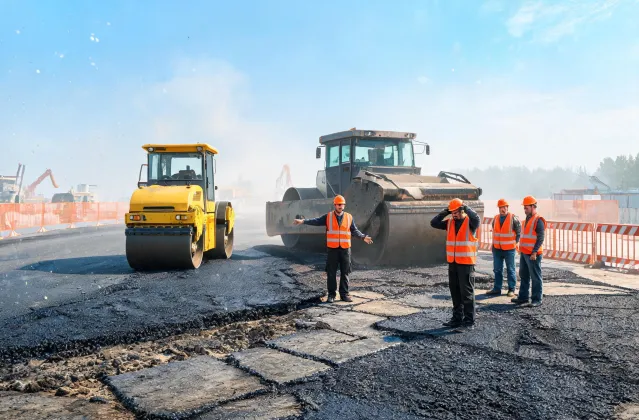
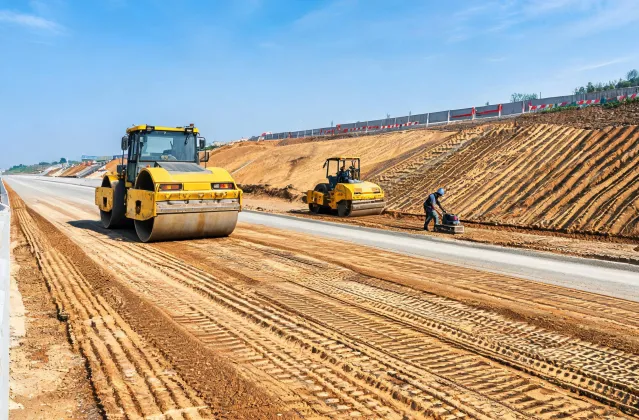
Problem-led configurations — not a generic product dump. Punch in your scenario and see which Hamm drums, amplitudes and service plan fit before you request a quote.
Interactive guide for application engineers and buyers. Results are directional; final quotes confirm operating weight, compaction force and drum options.
Selection trade-offs application engineers walk through before a quote. These are operating limits, not brochure caveats.
Prefer cohesive clay and embankment lifts where kneading energy densifies the lift. Limit: leave padfoot shells off finished asphalt mats — they mark the surface and waste pass time.
Prefer granular base, binder and wearing courses when you need a sealed rolling face. Limit: on high-plasticity clay, smooth drums can bridge lifts and leave soft spots nuclear gauges later reject.
Oscillation will not replace vibratory energy on thick binder courses; use it for thin lifts and structure-adjacent work only.
0.8 mm amplitude on cool thick lifts is fine; the same setting on a cooling thin wearing course risks aggregate fracture and mat tears.
Heavier tandem frames raise compaction force but can rut soft embankment approaches — downshift class or use a soil-compactor lead machine first.
Outcomes emphasize density, temperature windows, drum diameter fit and staging — not carbon slogans. Packages stay honest about limits: oscillation will not replace vibratory energy on thick binder, and padfoot drums are the wrong tool on finished asphalt mats.
Clay fills reached target density one lift earlier after switching to padfoot drums and staging scraper kits at the quarry-belt hub.
Thin wearing course near apartment blocks held density without vibration complaints; LED and low-noise cab kits kept the overnight window on schedule.
Soil compactors plus plate compactors cleared utility corridors while the main pad stayed on schedule for foundation pours.
Padfoot class with lift coaching cut rework when plasticity index shifted after rain, keeping nuclear density tests inside acceptance bands.
Share fleet size, replacement window and site type. Application engineers return machine classes, expected compaction force bands and staging options sized to your corridor.