Hamm or Jon Hamm? A Roller Distributor Buying Guide for Hamm Roller Parts and Paver Sourcing
If you searched "jon hamm 30 rock", you're looking for the actor. This isn't that page. But if you typed hamm roller parts or paver sourcing and landed here, you're in the right place.
Hamm is a manufacturer of compaction and paving equipment — soil compactors, asphalt rollers, pavers, motor graders, and the genuine parts that keep them running. In the road construction world, Hamm is more than a name. It's a specified brand on projects all over the world.
Here's the thing: buying Hamm parts or sourcing a paver doesn't have a single correct answer. If anyone gives you a one-size-fits-all recommendation, they haven't done this long. I've handled equipment and parts procurement for contractors for 12 years. I've personally made and documented 14 significant mistakes, totaling roughly $180,000 in wasted budget. Maybe 17 if I count the early ones. This guide is the checklist I wish I had before those mistakes.
Three Situations, Three Different Answers
The right decision depends on which of these three groups you fall into:
- You own Hamm equipment and need replacement parts.
- You're a contractor sourcing a paver, roller, or other machine for an upcoming project.
- You're a distributor or dealer evaluating a new supplier, or wondering whether private label road rollers make sense for your lineup.
Each situation has different priorities. Let's walk through them.
Situation 1: You Already Own Hamm Equipment and Need Roller Parts
This is where most of my expensive lessons happened.
When I first started sourcing aftermarket parts for compaction equipment, I assumed the components were all made to the same tolerances. If a filter or a hydraulic cartridge looked right and the part number matched, it should work. Three failed orders later, I learned the hard way that "compatible" doesn't mean "identical." On a 30-piece order where every single item had the wrong thread pitch, we didn't find out until the crew was on-site and the machine wouldn't start.
That error cost $1,100 in redo plus a 1-week delay. Not ideal, but workable. The bigger loss was credibility with the client.
So what should you actually do?
If your machine is under warranty or compliance-critical: buy OEM parts from an authorized distributor. CE marking on construction machinery requires a Declaration of Conformity from the manufacturer. When you substitute parts, that compliance chain gets complicated. It doesn't mean aftermarket parts are automatically out of compliance. It means you need to verify.
If your machine is older and no longer supported: you have more flexibility. We've used private-label parts on machines that are 10+ years old. On one older soil compactor, a private-label hydraulic pump outlasted three previous "OEM-spec" rebuilds. But that was only after we checked pressure ratings, mounting dimensions, and port configurations against the actual machine — not just against a catalog.
The rule I use now:
OEM for anything that affects safety or emissions. Private label only for wear items like filters, belts, and tips, and only when the supplier can provide measurable specs — not just a photo and a promise.
A quick note on sourcing: don't rely on a photo. Ask for the part drawing or datasheet. If a supplier can't send one, that's an answer.
Situation 2: You're a Contractor Sourcing a Paver or Roller
Maybe you're not chasing parts at all. You need a machine for the season.
This is where the industry has changed a lot. What was best practice in 2019 may not apply to what's coming out now. New emission tiers changed engine packages, and that changed everything downstream — hydraulic interfaces, electronic controls, even operator training.
My initial approach to machine sourcing was wrong. I thought the lowest-priced machine with the right drum width and weight class was the smart buy. Three budget overruns later, I learned about total cost of ownership. The machine that's 8% cheaper can cost you 20% more if the dealer's parts fill rate is worse.
For a paver or asphalt roller, ask these questions:
- What's the dealer's parts fill rate? If they don't stock hamm roller parts, the project stops.
- What's the lead time for major components, like the screed or eccentric drive?
- Who provides the operator training, and is it included?
- What's the warranty path if the machine goes down on your job site?
The brand matters less than the answers to those questions. Yes, Hamm has a strong range across compaction, pavers, and graders. But the distributor is the one who decides whether you get a bypass hose tomorrow or in three weeks.
Between you and me, I've watched contractors choose a machine based purely on brand legacy, then lose a week of paving because the local dealer didn't stock a common wear part. The fundamentals haven't changed: machine availability is worth more than a badge.
Situation 3: You're a Distributor Considering Private Label Road Rollers
This is a different game. You're not buying one machine. You're building a relationship with a supplier and putting your name on their product.
Here's the thing: private label road rollers aren't a dirty word. Plenty of regional distributors private label equipment that's manufactured in a contract facility. That's been going on for decades. But the quality gap between facilities is way bigger than most distributors expect.
If you're evaluating a private label partnership, do two things.
First, audit the manufacturer. They should have ISO 9001-aligned processes, or something demonstrably similar. They should be able to show you quality control documentation, not just a brochure. In 2022, I almost signed a distribution deal with a supplier who had a great product but zero after-sales support. We dodged that one. A year later, their backorder rate hit 35% and they changed their production schedule without telling anyone.
Second, ask about compliance. Depending on where you're selling, road rollers need specific certifications. That's a legal requirement, not a suggestion. If your supplier can't explain the certification process, the risk lands on your company.
Also, decide your stance on aftermarket parts for the equipment you sell. Are you selling OEM-only? If you're considering offering private label parts alongside OEM Hamm parts, be transparent about the difference. Contractors are sophisticated. They'll find out anyway.
How to Tell Which Situation You're In
It sounds obvious, but most buyers skip this step. Here's a simple set of questions:
- Do you have a serial number and a machine that already exists? → Situation 1.
- Are you responding to a bid that requires a specific new machine? → Situation 2.
- Are you evaluating a long-term supply relationship that affects your whole product line? → Situation 3.
Let's be direct: the worst spot is mixing them up. Using Situation 1 tactics for a Situation 3 decision will hurt you. I've seen it happen.
One more thing. If you're still reading because you got here from a search for "jon hamm 30 rock," you've probably already figured out this wasn't about the actor. But if you're here for heavy machinery, you've got the right person.
There's something satisfying about finally finding the right part and watching that roller get back on the job. After all the part-number headaches and compliance checks, that moment is the payoff.
If you want current spec sheets, prices, or part availability, the best move is to contact an authorized Hamm dealer directly with your machine's serial number. I don't keep current unit prices on hand — they shift with steel prices, exchange rates, and emissions updates. I can say this much: the shortest path to a usable answer is asking a distributor with a catalog and a bin full of parts, not a search engine.
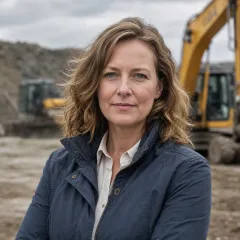
Charlotte Avery is an earth-moving machinery analyst covering excavators, mini excavators, loaders, skid steers, dozers, graders, compactors, and attachments. She uses ISO 6165 machine classification and ISO 20474-1 safety requirements while examining operating mass, rated payload, breakout force, ground pressure, stability, visibility, guarding, and attachment compatibility. Her work helps contractors and fleet buyers match machine size, undercarriage, transport limits, and protective features to terrain, duty cycle, and jobsite access.