Hamm 2210 Compactor Specs: Get the SSD Number Before You Ask for the Price
-
The short version: pick the spec sheet, not the brand name
-
Why you should listen to an office administrator about compaction equipment
-
Lesson one: the SSD suffix is not decoration
-
Lesson two: the roller compactor distributor buying guide you're using was probably written by a distributor
-
Lesson three: compactor private label parts — not automatically bad, but verify
-
One thing I got right, and it still surprises me
-
Where this advice stops working
The short version: pick the spec sheet, not the brand name
If you're shopping for a Hamm 2210 compactor this year, the most useful thing I can tell you is this — before you ask for pricing, ask for the written spec sheet. Not the glossy dealership overview. The one with the full part number on it, including the SSD suffix if your job needs it. "Hamm 2210" on its own is a family name, not a machine.
I nearly approved a purchase order in 2024 that would have cost us roughly $11,000 less than the correct configuration — and given us a machine that couldn't do the job we bought it for. The gap wasn't a discount. It was a different build behind the same model number.
So here's my whole argument up front, in case you're the kind of reader who only has ninety seconds:
Request the written spec sheet with the full part number. Confirm the SSD/config suffix against the actual site conditions. Only then start talking price.
Everything below is the why.
Why you should listen to an office administrator about compaction equipment
Full disclosure first: I'm the office administrator for a roughly 90-person equipment company. I manage all the ordering — from filter kits to dealer quotes on machines we rent out or resell. My annual spend across about six vendors sits somewhere around $400K, and I report to both the operations lead and our finance person.
I am not a compaction engineer. I don't run a roller. I don't tune drums. What I am is the person who catches the paperwork gap between what a dealer quotes and what actually shows up. I've done this long enough — since taking over purchasing in 2020 — to have made a few expensive mistakes and learned the shape of them.
My experience is based on maybe a dozen real machine purchases and a lot more parts ordering. If you're buying in fleets of twenty or running a national dealer program, your mileage will differ significantly. This is the view from the small-operator desk.
Lesson one: the SSD suffix is not decoration
When I first started pulling Hamm 2210 compactor specifications together for a quote, I did what most buyers do — I searched the model, compared three dealer PDFs, and picked the one with the friendliest terms. I assumed "2210" meant "2210."
It doesn't.
Hamm's 2210 line gets grouped under a model family, but the configuration suffix — SSD in the case we were looking at — points to a specific setup intended for specific conditions. Different drum configuration, different weight distribution, sometimes a different use case entirely. Two 2210s from two different dealers can look identical on the summary line and behave very differently on a soil job.
I assumed the dealership's "standard spec" was standard. Didn't verify. Turned out our site needed the configuration behind that suffix, and the cheaper quote was priced around a build that wouldn't have cut it.
Lesson learned the hard way: the model number identifies the family; the suffix identifies the machine.
If a distributor can't or won't give you the full part number in writing before quoting, that's your answer. Move on.
Lesson two: the roller compactor distributor buying guide you're using was probably written by a distributor
Here's the thing nobody says out loud about the "roller compactor distributor buying guide" PDFs floating around. Most of them were written to sell a catalog, not to inform a buyer.
That's not a conspiracy — it's just how vendor content works. It's the same reason I don't trust an internal "preferred supplier list" until I've actually tested three of the names on it. A road roller catalog is a marketing document. Treat it that way.
What actually helps is asking the awkward questions:
- What's the exact part number for what you're quoting?
- Which jobs is this configuration not suited for?
- Where does your service coverage stop — and who do you hand off to when it does?
That last question is the one that separates real dealers from order-takers. A distributor who says "we don't stock that drum size — here's who does it better locally" has just told you more useful information than a 40-page catalog. I'd rather work with a specialist who knows their limits than a generalist who overpromises. There's a reason the vendor who told me "this isn't our strength" also became the one I called first for everything else.
Lesson three: compactor private label parts — not automatically bad, but verify
I have a complicated relationship with compactor private label parts. So does anyone who's been burned and then pleasantly surprised by the same category within a year.
The honest take: there are private-label suppliers doing genuinely solid work, and there are suppliers selling relabeled whatever-they-could-get-hold-of-cheapest. I've seen both in the same quarter, ordering the same category of wear part.
The way I screen them now:
- Ask for the traceability document, not the marketing page. Where was it made, to what tolerance, tested against what standard?
- Confirm fitment in writing for your specific machine. "Universal" almost always means "ours happened to work on one model." Always verify against your build code.
- Buy one, install it, watch it. Don't commit to a bulk order on a new private-label source. Ever.
I learned #2 the expensive way. Got a good price on what was described as a compatible part. Wasn't compatible. Rework and downtime cost more than the OEM part would have. Net loss on that order: somewhere near $1,800 and a very annoyed ops manager.
So no — I'm not saying skip private label. I'm saying skip private label without verification. There's a big difference.
One thing I got right, and it still surprises me
Dodged a bullet in early 2025 when I double-checked a quoted weight spec against the model sheet before signing. Was one signature away from ordering a configuration that would have been overweight for how we intended to transport it. No damage done, but that was close.
There's something satisfying about catching that kind of thing before the money moves. After enough orders where you didn't catch it, the ones you did catch start to feel like the whole point of the job.
Where this advice stops working
Two honest limits, because I don't want to sell you certainty I don't have.
First, scale. My method works for one-to-few machine purchases with a hands-on buyer. It does not scale to fleet procurement, where standardization and existing service contracts matter more than per-unit optimization. If you're buying for a rental fleet at volume, my advice is the wrong shape for your problem.
Second, geography. I've only worked with domestic dealer networks. I can't speak to how these verification steps translate to cross-border sourcing, grey-market imports, or equipment bought at auction in another country. That's a different playbook entirely.
And a small one — I should note that I've been doing this for five years, not fifteen. There are people in my own company who could tell you more about a 2210's behavior on clay versus sand than I ever will. My edge is in the paperwork, not the compaction theory.
So: get the SSD number. Read the spec sheet before the price sheet. Ask your distributor what they're not good at. The rest sorts itself out.
Pricing and configuration details referenced above are from our own 2024–2025 vendor quotes and are for illustration only. Verify current specifications and pricing directly with an authorized Hamm dealer before purchase.
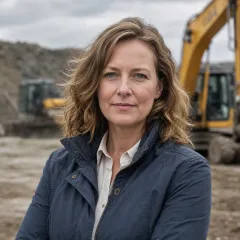
Charlotte Avery is an earth-moving machinery analyst covering excavators, mini excavators, loaders, skid steers, dozers, graders, compactors, and attachments. She uses ISO 6165 machine classification and ISO 20474-1 safety requirements while examining operating mass, rated payload, breakout force, ground pressure, stability, visibility, guarding, and attachment compatibility. Her work helps contractors and fleet buyers match machine size, undercarriage, transport limits, and protective features to terrain, duty cycle, and jobsite access.